
Counselling in Sheffield for when life feels harder than it looks
You might be coping on the outside while underneath you're anxious, overwhelmed, exhausted, struggling with sleep, masking how you really feel or simply wondering how long you can keep going like this.
You don't have to have everything figured out before coming to therapy.
Counselling for adults and young people 13+ in Hillsborough, Sheffield. Face-to-face, online and Walk & Talk.
Arrange a free 15-20 minute telephone conversation
Anxiety Counselling in Sheffield
When anxiety starts taking up too much space
You might be coping on the outside while underneath your mind rarely seems to switch off. You may be worrying, overthinking, avoiding things or simply feeling that anxiety is beginning to have more control over your life than you would like.
Anxiety is something we all experience. It becomes more difficult when it starts stopping you from doing the things you need or want to do.
Anxiety Counselling in Sheffield
Anxiety is a normal part of being human. We all experience it in one form or another, and at times it can even be useful — helping us recognise potential danger, prepare for something important or respond when something doesn't feel right.
It can become more difficult when anxiety starts taking up too much space; when worry becomes hard to switch off, when you begin avoiding situations because of how they make you feel, or when anxiety starts stopping you from doing the things you need or want to do.
At that point, anxiety can begin to shape your choices and gradually make your world feel smaller.
You don't need to know exactly why you feel anxious before coming to counselling. Sometimes understanding what is happening is something we discover through the work we do together.
What Can Anxiety Feel Like
There isn't one way to experience anxiety.
For some people, anxiety happens mainly in their thoughts. You might overthink situations, replay conversations, question yourself or spend a lot of time worrying about things that haven't happened yet.
For others, anxiety can feel very physical. Your heart might race, you may feel tense or restless, your breathing can change, or you might experience feelings of panic that seem to arrive without warning.
Anxiety can also begin to change the way you live your life.
You may recognise some of the following:
- Constant worry or overthinking
- Replaying conversations and questioning what you said or did
- Thinking ahead to everything that could potentially go wrong
- Feeling uncomfortable with uncertainty
- Avoiding people, places or situations because of how they make you feel
- Panic or strong physical sensations
- Seeking reassurance from other people
- Finding it difficult to relax or switch off
- Becoming irritable or overwhelmed more easily
- Difficulty sleeping because your mind won't settle
- Appearing confident or capable while privately doubting yourself
You don't have to experience all of these things for anxiety to be having an impact on your life.
When nobody else knows you're struggling
Not everybody experiencing anxiety looks anxious.
You might still go to work, look after your family, see friends and get through everything that needs doing. Other people may see you as confident, dependable or someone who simply gets on with things.
Underneath, it can feel very different.
You may spend a great deal of time preparing for situations, rehearsing what you're going to say, analysing interactions afterwards or trying to hide how overwhelmed you're actually feeling.
Sometimes we become so used to functioning this way that we don't recognise how exhausting it has become.
Counselling can provide somewhere you don't have to pretend that everything is fine.
Understanding your anxiety
It's understandable to want anxiety to simply go away.
But anxiety often has patterns. Certain situations, thoughts or experiences can trigger it, and the things we do to make ourselves feel safer can sometimes unintentionally keep those patterns going.
Avoiding something might make you feel better in the moment, for example, but can make facing it next time feel even harder. Reassurance can temporarily quieten a worry, only for another doubt to appear later.
Counselling gives us the opportunity to slow this down and become curious about what is happening rather than simply fighting against it.
Together we can explore what seems to trigger your anxiety, the thoughts and feelings that accompany it and the ways you've learned to respond.
We may also explore earlier experiences and relationships where these feel relevant. Sometimes the way we respond today makes more sense when we begin to understand where those patterns came from.
How I work with anxiety
My approach to counselling is primarily Person-Centred. This means our work begins with you, your experiences and what you choose to bring into the room rather than following a predetermined programme.
I am also trained in Cognitive Behavioural Therapy (CBT), which means that where appropriate we can look more closely at the relationship between your thoughts, feelings and behaviour.
This might involve recognising patterns such as avoidance, reassurance seeking or ways of
thinking that are contributing to anxiety, and exploring different ways of responding.
This doesn't mean every session will involve worksheets, exercises or homework. I believe therapy should fit the person rather than expecting the person to fit the therapy.
The aim isn't to tell you that you shouldn't feel anxious. It's to help you understand yourself and your anxiety better, giving you greater choice over how you respond to it.
Anxiety and sleep
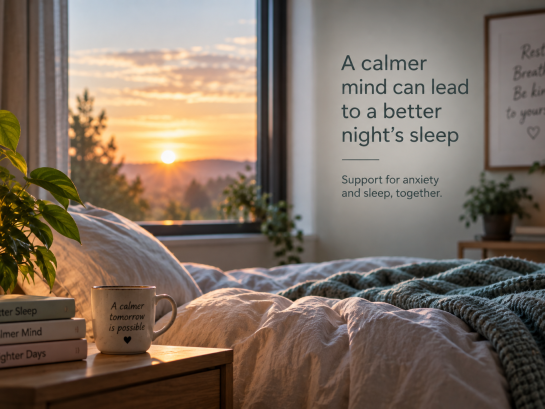
Anxiety and sleep can easily begin to feed into one another.
You might feel exhausted throughout the day, only to become wide awake when your head reaches the pillow. Thoughts that were easier to push aside while you were busy can suddenly become much louder.
Poor sleep can then leave you feeling more tired, irritable and emotionally vulnerable the following day, which can make anxiety feel even harder to manage.
As an accredited sleep practitioner as well as a counsellor, I can explore both sides of this with you rather than treating your sleep and emotional wellbeing as completely separate issues.
Why Choose Rivelin?
Counselling is a very personal experience and finding someone you feel comfortable working with matters.
At Rivelin Counselling & Wellbeing Services I offer:
✓ A qualified and BACP registered counsellor
✓ A Person-Centred approach, integrating CBT where appropriate
✓ Trauma-informed counselling
✓ Additional expertise as an accredited sleep practitioner
✓ Counselling for adults and young people aged 13+
✓ Face-to-face counselling in Hillsborough, Sheffield
✓ Online counselling
✓ Walk & Talk therapy in Sheffield
Taking the first step
Making the first contact with a counsellor can sometimes feel like the hardest part — particularly when anxiety is already making you question or overthink decisions.
You don't need to write a long explanation or have worked out exactly what you want to say.
I offer a free 15–20 minute telephone conversation before arranging your first counselling session. It's an opportunity to tell me a little about what has brought you to counselling, ask any questions and get a sense of whether working together feels right for you.
There is no obligation to arrange a session afterwards.
If anxiety is getting in the way of the life you want to live, perhaps the first step is simply having a conversation.